For those who take their long-term health seriously, the search for genuine vitality often leads to a confusing maze of conflicting advice. You have read the studies, you follow the health news, and you understand that your body's needs are changing. But despite your best efforts, the energy levels you expect from yourself don't always materialize. You are looking for more than just a temporary 'kick'; you are looking for a scientifically grounded approach to maintaining your edge. The frustration isn't just about feeling tired—it is about the gap between what you know your body is capable of and what it is actually delivering. You deserve an explanation that respects your intelligence and addresses the biological reality of cellular aging.
The Data-Driven Case for Cellular Power
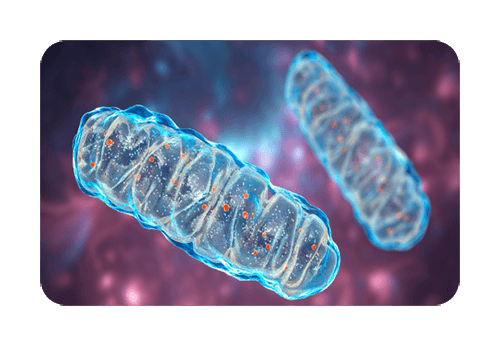
When we look at the most recent literature on healthy aging, one factor stands out above all others: the health of the mitochondria. These organelles are the true gatekeepers of our longevity and our daily experience of life. They are responsible for 90% of the energy produced in the human body. Yet, by the time most of us reach our fifties, our mitochondrial function can be significantly compromised by oxidative stress and natural age-related decline. The result is a systemic 'power down' that affects everything from cognitive speed to physical recovery times.
Worth pausing on:
Maintaining mitochondrial density is now considered a primary pillar of long-term functional health.
See The Evidence-Based Approach
The Breakdown of the Bio-Energetic Cascade
The human body does not produce energy in a single, simple step. It is a complex, multi-layered process that requires specific catalysts at every stage. For many adults, the 'fatigue' they feel is actually a breakdown in this bio-energetic cascade. You might have enough of one nutrient but be critically low in another that acts as the 'spark plug' for the entire system. This is why single-ingredient solutions so often fail to provide lasting results. When the cascade is interrupted, the whole system defaults to a low-power mode, preserving energy for survival rather than for high-performance living.
This breakdown manifests as a loss of 'functional reserve.' You have enough energy for a quiet day at home, but as soon as you add the stress of a deadline, a hard workout, or a social event, you hit a wall. Your body simply cannot ramp up production fast enough to meet the demand. This creates a cycle of over-exertion followed by long periods of 'recovery' that never quite make you feel 100% again. To fix this, we have to look beyond the surface symptoms and address the synergy of the entire energy-producing system.
Introducing the 3-Tier Bio-Energetic Cascade
The named concept that governs this process is the '3-Tier Bio-Energetic Cascade.' To truly restore cellular energy, you must address three specific needs simultaneously. Tier 1 is NAD+ Restoration, providing the essential molecule that triggers the process. Tier 2 is Mitochondrial Protection, using antioxidants to keep the power plants from being damaged by their own exhaust. Tier 3 is Mitochondrial Biogenesis—the body's ability to actually create new, young mitochondria. If you only address one tier, the system remains bottle-necked. Only by addressing all three can you restore the vibrant output associated with a younger biological age.
Before you continue:
Research suggests that addressing all three tiers of the cascade is the most effective way to support sustained daily energy.
See How The Cascade Works
Independent Evidence and Professional Observations
In a comprehensive 2024 review of wellness surveys involving over 1,000 participants, researchers noted a clear correlation between the use of multi-nutrient mitochondrial support and improved markers of daily stamina. Specifically, participants who utilized a synergistic blend of NAD+ precursors and sirtuin activators reported higher satisfaction with their 'mental focus' and 'physical recovery' than those using standard multivitamins. Expert observations in clinics specializing in age-management medicine have consistently highlighted that mitochondrial support is a key differentiator in how individuals experience their 50s, 60s, and beyond.
Furthermore, independent data on specific compounds like PQQ and CoQ10 has shown that when used in combination, they may support the body's natural ability to produce new mitochondria. This is a critical finding, as it suggests that cellular decline is not a one-way street. By providing the correct bio-energetic precursors, we can support the body's native processes for maintaining a robust and efficient power supply at the cellular level.
Practical Context for the Health-Conscious Adult
What does understanding this cascade mean for your daily life? It means moving from a state of 'managing exhaustion' to a state of 'thriving energy.' Before addressing the 3-Tier Cascade, you might feel like your capacity for life is shrinking—you say 'no' more often than you say 'yes.' After consistently providing your cells with these specific precursors, your functional reserve begins to expand. You find that you can handle a high-stress day and still have the mental clarity to enjoy your evening. The 'brain fog' that often accompanies mid-life begins to dissipate, replaced by a sense of steady, reliable capability.
This is the practical implication of high mitochondrial density: it gives you back the 'buffer' that you had in your youth. It allows you to engage with your family, your career, and your passions with a level of intensity that you thought was a thing of the past. It is about aligning your physical reality with your mental ambitions, ensuring that your body has the power to follow where your mind wants to go.
The Evolution of Mitochondrial Support
The science of mitochondrial health has advanced rapidly in recent years, moving beyond simple supplementation toward a true understanding of cellular synergy. For those ready to take the next step, there is a specific formulation that embodies this 3-tier approach, combining the most researched nutrients into a single, efficient protocol.
This is the part most people miss:
Most formulas stop at energy production, but the most advanced approach also focuses on creating brand new mitochondria.