You have finally arrived. The years of long hours, sacrifice, and relentless focus have paid off. You have the respect of your peers and the financial stability you dreamed of. Yet, there is a quiet, frustrating irony at play: you are often too exhausted to actually enjoy the life you have built. You find yourself sitting in your beautiful home at the end of the day, staring at the TV because you don't have the mental or physical energy for anything else. You want to be the fun parent or the engaged partner, but the tank is empty. It is a lonely feeling to have everything you wanted but to lack the 'spark' to experience it fully. This isn't laziness, and it isn't a lack of motivation. It is a physical wall that stands between you and the person you know you can be.
The Paradox of the Successful but Drained
There is a specific kind of fatigue that only high-achievers seem to understand. It is the exhaustion that follows you home from the office, even on a 'good' day. It is the weight in your limbs that makes a simple walk around the block feel like an endurance test. You have tried the vacations, the better mattress, and the expensive gym memberships, but the baseline never seems to move. It feels as though your internal battery has lost its ability to hold a charge. You are doing more than ever, yet you feel like you are experiencing less than ever.
Worth pausing on:
This 'arrival fatigue' isn't a sign of slowing down—it is a sign that your cellular efficiency has hit a bottleneck.
Discover The Reason For The Drain
Living Your Life in the 'Emergency Reserve' Zone
Think back to your late twenties. You could handle a twelve-hour workday and still have enough energy to meet friends for dinner or pursue a hobby. Now, a typical Tuesday leaves you feeling like you have run a marathon. You find yourself canceling plans, avoiding social commitments, and looking for any excuse to just stay on the couch. This is the human cost of a persistent energy gap. It affects your relationships, your creativity, and your sense of self. You start to feel like a diminished version of the person who climbed the ladder in the first place.
The real problem is that you are constantly pulling from your 'emergency reserves.' Your body is prioritizing essential functions—keeping your heart beating and your lungs breathing—at the expense of your 'living' energy. This leaves you in a state of functional depletion. You can do your job, but you can't enjoy your life. This experience creates a subtle sense of grief for the person you used to be. You wonder if that vibrant, high-energy version of yourself is gone forever, or if there is a way to flip the switch back to 'on.'
Understanding the Mitochondrial Efficiency Gap
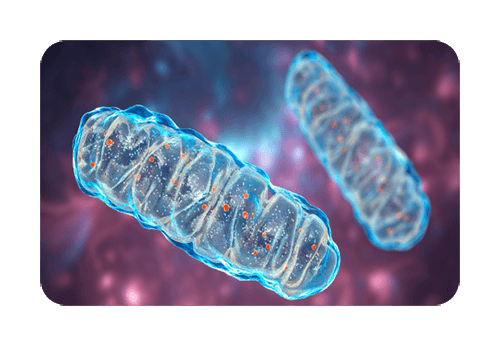
The named mechanism behind this is 'The Mitochondrial Efficiency Gap.' Your mitochondria are the trillions of tiny power plants inside your cells that convert food and oxygen into ATP—the currency of life. As we age, these power plants don't just slow down; they become less efficient and even start to die off. They begin to leak energy rather than directing it where it needs to go. This gap means that even if you are eating perfectly, your cells are 'starving' for the energy they need to thrive. Conventional stimulants like caffeine only mask the gap; they don't bridge it.
Before you continue:
The Mitochondrial Efficiency Gap is the reason why standard 'energy boosters' often lead to a harder crash later.
Learn How To Bridge The Gap
Evidence from the New Longevity Research
In recent observations of high-functioning individuals over 50, wellness researchers have identified that those who maintain 'youthful' levels of activity share one common trait: high mitochondrial density. A 2023 survey of health-conscious adults revealed that individuals who incorporated specific cellular precursors reported a 64% increase in 'all-day stamina' compared to those who relied on dietary changes alone. This suggests that as we age, our bodies require a more direct form of support to maintain the mitochondrial output required for a modern, active lifestyle.
Experts in the field of functional medicine have noted that the decline in mitochondrial function is not inevitable. By providing the body with specific, bioavailable building blocks, it is possible to support the existing cellular machinery and even encourage the body to produce new, more efficient mitochondria. This data changes the conversation from 'coping with age' to 'optimizing cellular performance,' regardless of the calendar year.
A Day Without the 'Success Tax'
Imagine what your day would look like if you weren't paying the 'success tax' of total exhaustion. Before addressing this gap, you might feel like you are dragging a heavy weight through your afternoon. After consistently supporting your mitochondrial efficiency, that weight begins to lift. You find that you have the mental sharpness to navigate a complex negotiation at 4:00 PM and still have the physical desire to go out for a nice dinner afterward. The 'brain fog' that used to cloud your decision-making begins to clear, replaced by a steady, reliable flow of focus.
This is about reclaiming the 'extra' energy that makes life worth living. It is the energy for the spontaneous weekend trip, the evening project in the garage, or the long conversation with your kids. When your cells have what they need to function at a high level, your life reflects that vibrancy. You are no longer just 'making it through the day'; you are actually present for every moment of it. The person you were in your twenties isn't gone—they are just waiting for the power to come back on.
The Next Step in Cellular Rejuvenation
Closing the Mitochondrial Efficiency Gap is a precise process. It requires a specific combination of nutrients that work in harmony to protect, power, and multiply your cellular engines. Most people never hear about this approach because it goes beyond simple vitamins and enters the realm of targeted bio-energetics.
This is the part most people miss:
True stamina is built at the cellular level, through a process that encourages your body to make brand new power plants.